

Real Estate Financial Modeling Reprices as Cap Rates Split by Asset Class in 2026
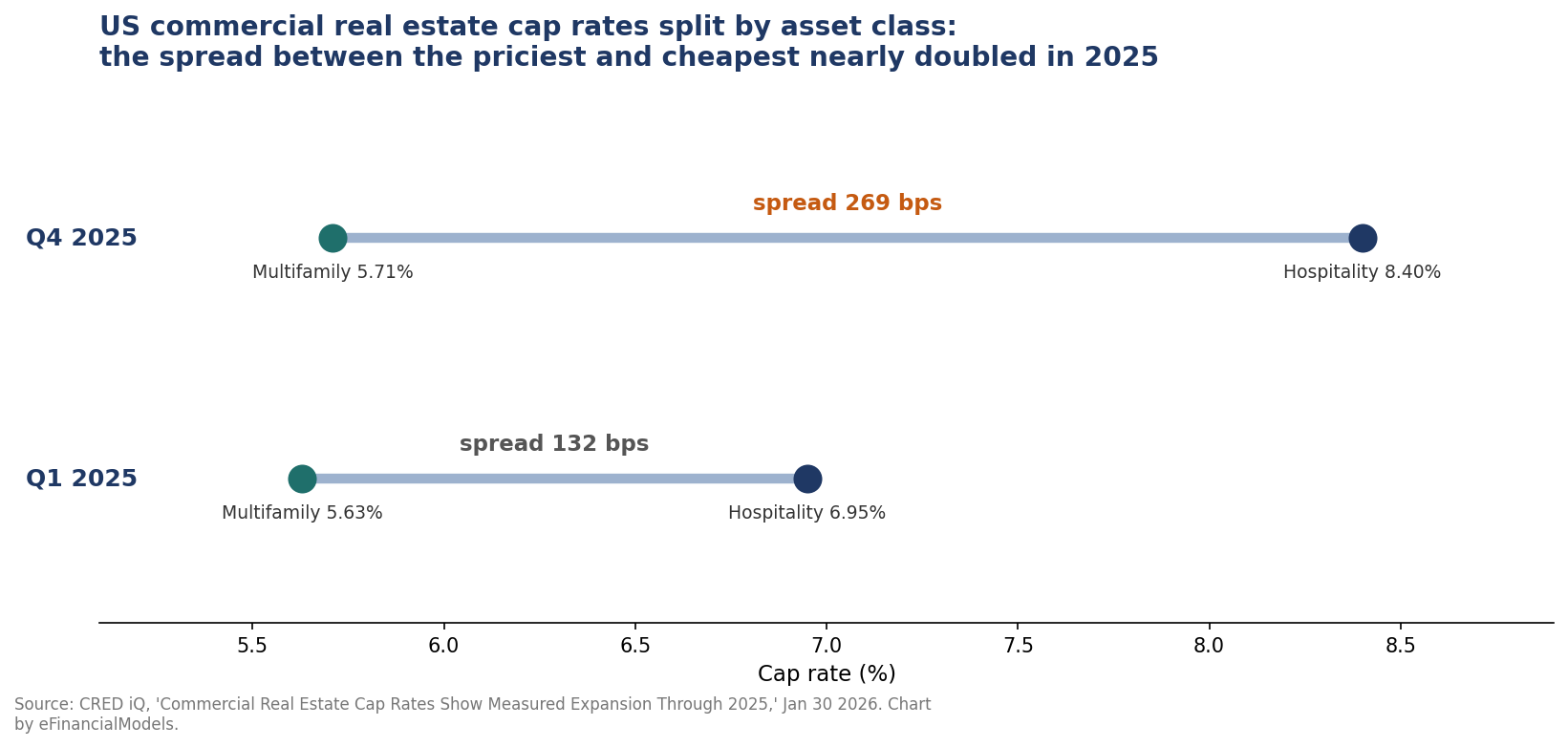
The cap-rate spread between asset classes nearly doubled in 2025, from about 132 to about 269 basis points. Source: CRED iQ; chart by eFinancialModels.
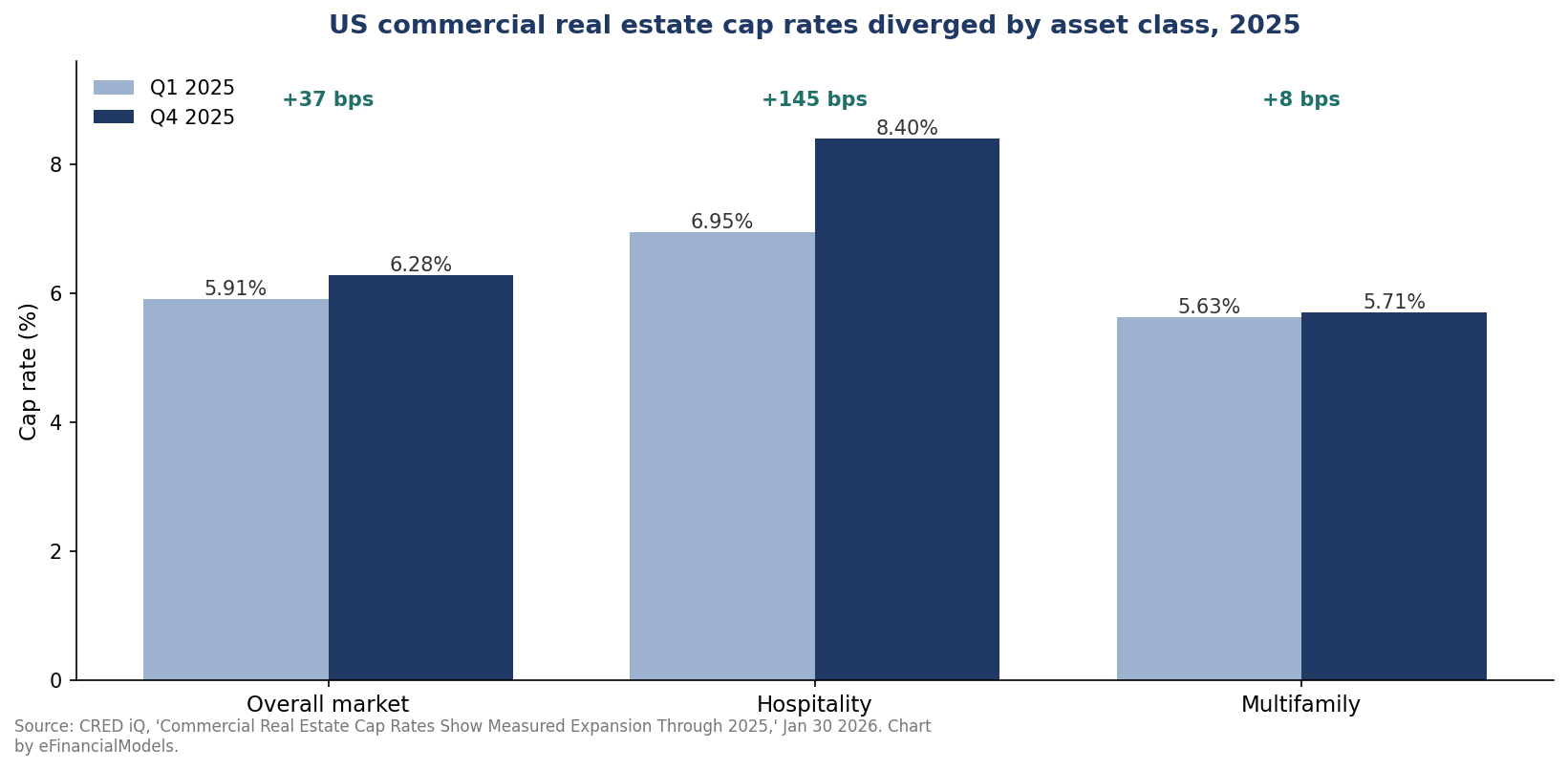
US commercial real estate cap rates diverged by asset class in 2025, with hospitality up 145 basis points to 8.40 percent while multifamily held near 5.71 percent. Source: CRED iQ; chart by eFinancialModels.

The 2026 rebound in three figures: investment volume up 16 percent, 74 percent of investors buying more, and cap rates compressing 5 to 15 basis points. Source: CBRE; chart by eFinancialModels.
New 2026 data shows US commercial cap rates diverging by asset class as volume rebounds; eFinancialModels expands its real estate financial modeling templates.
According to CRED iQ loan analytics, overall market cap rates widened from 5.91 percent in the first quarter of 2025 to 6.28 percent by year end, a move of 37 basis points. Beneath that average the spread grew wider. CRED iQ reports that hospitality cap rates climbed 145 basis points to 8.40 percent, while multifamily barely moved and finished the year at 5.71 percent. The analytics firm attributes the shift to pricing on property-level fundamentals rather than broad market sentiment, which means the exit and financing assumptions that underwrote a deal two years ago no longer value it correctly today.
The divergence matters more in 2026 because the market is moving again. CBRE's U.S. Real Estate Market Outlook 2026 projects a 16 percent increase in investment volume for the year and expects cap rates for most property types to compress by 5 to 15 basis points, with 74 percent of surveyed investors planning to buy more commercial real estate than they did last year. Rising deal flow measured against freshly reset cap rates places a premium on the ability to re-run the numbers quickly and defensibly.
According to eFinancialModels Research, "When cap rates move by 50 to 100 basis points and the move is different for every asset class, the economics of a deal change even when the property does not. A well-structured Excel model lets an investor change two or three assumptions and read the effect on value, returns, and debt coverage in minutes. The templates are intended to help teams act on the repricing rather than be priced out by it."
KEY FINDINGS INVESTORS ARE MODELING IN 2026
The templates are built to turn a shifting market into decisions:
• Exit assumptions reset unevenly: Because exit cap rates have moved differently by asset class, the models let users flex the exit assumption and read the impact on value and internal rate of return.
• Lenders underwrite to coverage: The templates size debt against net operating income and surface the debt service coverage ratio a lender will test.
• Deal flow is rising: Standardized pro forma structures let teams screen more opportunities in less time using consistent, defensible inputs.
• One discipline underneath: Each decision converts a changing market into explicit, testable assumptions that a spreadsheet turns into the value, cash flow, and return figures a lender or partner will accept.
The full range of real estate financial model templates is available at eFinancialModels.
Communications Team eFinancialModels
eFinancialModels
info@efinancialmodels.com
Visit us on social media:
LinkedIn
Instagram
Facebook
YouTube
TikTok
X
Bluesky
Legal Disclaimer:
EIN Presswire provides this news content "as is" without warranty of any kind. We do not accept any responsibility or liability for the accuracy, content, images, videos, licenses, completeness, legality, or reliability of the information contained in this article. If you have any complaints or copyright issues related to this article, kindly contact the author above.
